
In This Essential Guide:
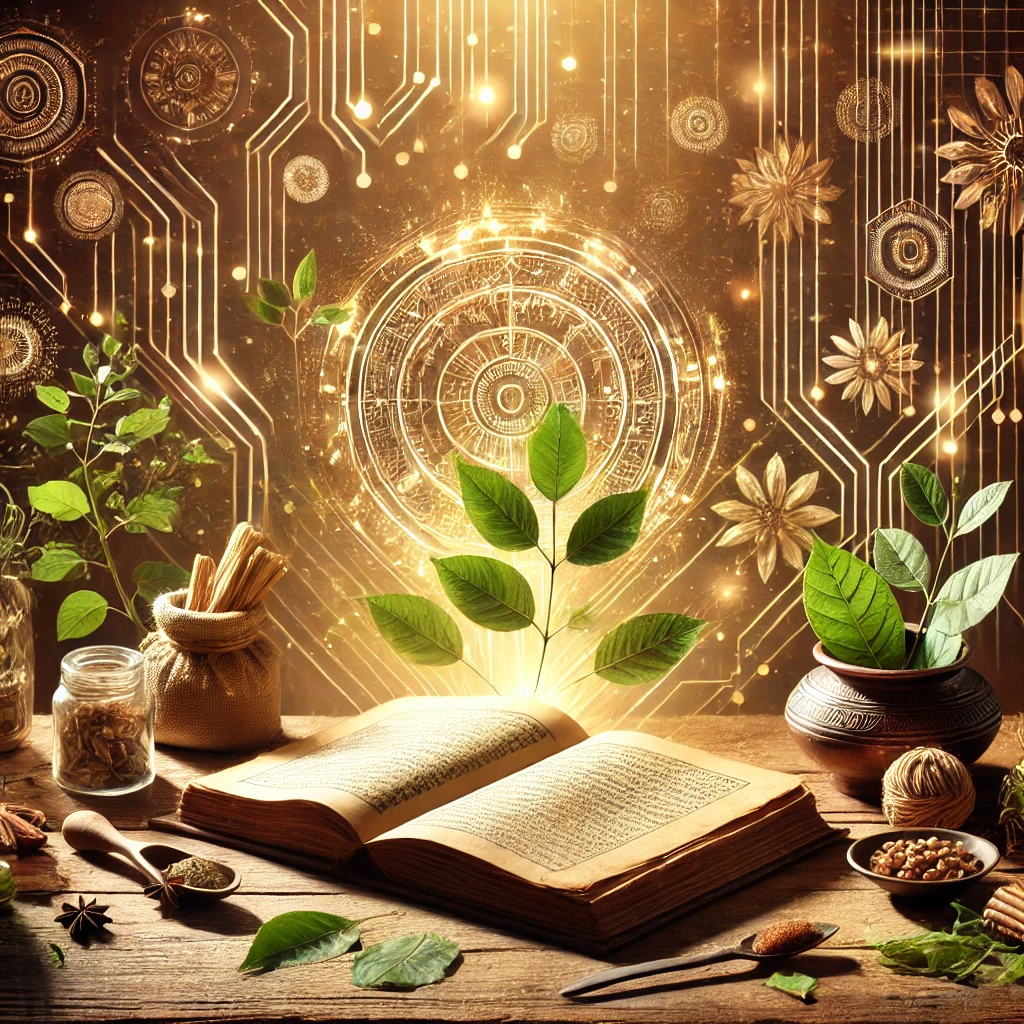
What is the Charaka Samhita? If you have ever explored the world of holistic health, you have likely heard this name. But in 2025, we shouldn’t just view it as an old book; we must view it as the Foundational Encyclopedia of Personalized Medicine.
Compiled over 2,000 years ago by the sage Charaka, this ancient Sanskrit text is a massive dataset of biological wisdom. What is the Charaka Samhita essentially? It is the first recorded system to treat the human body not as a machine of separate parts, but as a dynamic network of mind, body, and spirit.
Before diving deep, if you are new to the core concepts of this system, you might want to start with our guide on What is Ayurveda? to get the full picture.

Why is This Ancient Text Still Vital?
The enduring legacy of the text comes from its scientific rigor. What is the Charaka Samhita teaching us today? It was the first text to champion Epigenetics—the idea that your lifestyle choices (diet, sleep, stress) can alter the expression of your health.
It details the importance of:
- Bio-Individuality: Personalized nutrition based on genetics (Prakriti).
- Chronobiology: Tuning your body to circadian rhythms (Dinacharya).
- Psychosomatics: The direct link between mental ethics and physical disease.
Inside the Code: The 8 Sections (Sthanas)
The text is masterfully organized into eight distinct sections, or Sthanas. Think of these as the different departments of a modern super-hospital.
1. Sutrasthana (The Operating System)
The “General Principles” section. Its 30 chapters lay the foundation of the 3 Doshas (Vata, Pitta, Kapha), dietetics, and the philosophy of prevention. It is the “OS” that runs the entire Ayurvedic system.
2. Nidanasthana (Pathology & Diagnostics)
This section focuses on Etiology—the study of cause and effect. It teaches practitioners how to diagnose an illness not just by looking at symptoms, but by finding the “Root Cause” (Nidana), such as gut toxicity or stress.
3. Vimanasthana (Specifics & Protocols)
A crucial section for the modern age, dealing with measurement and epidemics (Janapadodhwamsa). It outlines the ethics of healing and how to measure the “digestive fire” (Agni) to prescribe the correct dose.
4. Sharirasthana (Anatomy & Embryology)
This is the “Human Biology” manual. It describes the body physically (tissues/organs) and energetically (Nadis). It also contains a remarkably detailed account of fetal development and genetics.
5. Indriyasthana (Prognosis)
The “Sensory Prognosis” section. It explains how to use the five senses to observe a patient—noting changes in voice, smell, and complexion—to predict the outcome of a disease with high accuracy.
6. Chikitsasthana (Therapeutics)
The largest section (30 chapters) is the “Clinical Handbook.” It provides detailed protocols, herbal formulas, and rejuvenation therapies (Rasayana) for treating everything from fever to longevity.
7. Kalpasthana (Pharmacy)
The “Pharmacology” guide. It gives precise instructions on how to prepare medicines, specifically for detoxification procedures like Panchakarma.
8. Siddhisthana (Success & Management)
The final section focuses on “Successful Outcomes.” It guides the doctor on how to manage complications and ensure the patient achieves complete restoration, not just symptom relief.
What Can We Learn Today?
What is the Charaka Samhita for the modern bio-hacker? It is a reminder that health is holistic.
- Prevention is Key: It places enormous emphasis on daily routines to stop disease before it starts.
- You Are Unique: There is no “one diet fits all.” Your path to health depends on your unique constitution.
Scientific References (Verified Sources)
FAQ: The Ancient Wisdom
Who wrote the Charaka Samhita?
It is attributed to the sage Charaka. However, it is a redaction of an even older text (Agnivesha Tantra), believed to be compiled between 100 BCE and 200 CE.
Is the Charaka Samhita relevant today?
Absolutely. When asking what is the Charaka Samhita, we find it contains the roots of modern concepts like immunology, digestion, and personalized medicine.