
The Verdict is In: 3 Dietitians Crown the Single Healthiest Nut for 2026
In a world of superfood fatigue, nutrition science has identified one clear winner for cognitive longevity and metabolic health.
Navigating nutritional claims in 2026 requires more than a casual glance at labels. To find the definitive truth, we sat down with three registered dietitians to ask: If you could only recommend one nut to optimize human longevity, which would it be?
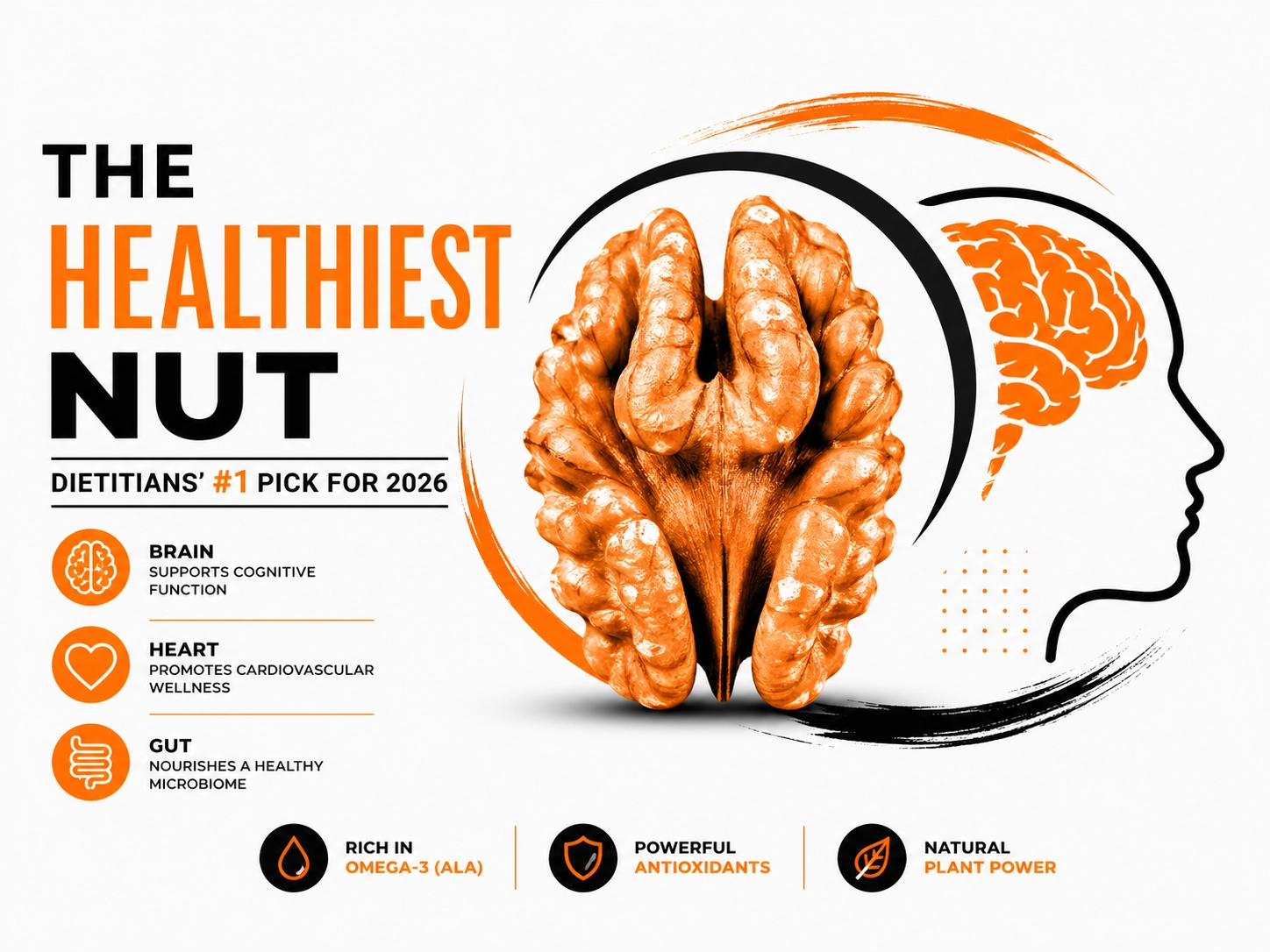
The answer was immediate and unanimous: The Walnut. While almonds and pistachios are nutritional powerhouses, the humble walnut (Juglans regia) is the undisputed champion of clinical markers and neuro-protection.
Why Walnuts? The Science of a 2026 Superfood
Modern nutritional science has shifted its focus from simple calorie counts to epigenetic signaling—how food talks to your genes. In this arena, walnuts are unparalleled.
The ALA Omega-3 Anomaly
Walnuts are the only tree nut containing significant levels of Alpha-Linolenic Acid (ALA). This plant-based omega-3 is the cornerstone of 2026’s anti-inflammatory protocols.
Oxidative Defense
Ranking #1 for antioxidant activity among all nuts, walnuts neutralize the free radicals that accelerate biological aging and DNA damage.
Neuro-Nutrition: The Brain-Nut Connection
It isn’t just folklore that a walnut looks like a human brain. In 2026, neurologists emphasize “Cognitive Reserve.” The unique matrix of Vitamin E, folate, and melatonin found in walnuts supports neurogenesis—the birth of new neurons in the hippocampus.
Pro-Insight:
Pairing your daily walnut intake with a data-driven AI Diet Chart allows you to synchronize healthy fats with your metabolic clock for maximum mental clarity.
“Think of walnuts as structural fuel for your nervous system. Their specific lipid profile isn’t just energy; it’s building material for your brain’s cellular membranes.”
The Gut-Heart Axis Innovation
A 2025 meta-analysis in the Journal of Clinical Nutrition highlighted that walnuts don’t just lower LDL; they change the composition of your gut microbiome.
By feeding specific strains of Lactobacillus, walnuts encourage the production of short-chain fatty acids (SCFAs). These molecules act as signaling agents that lower arterial blood pressure and strengthen the heart’s lining. This systemic benefit is why experts rank walnuts above almonds for metabolic longevity.
The “Lucky 7” Protocol
Optimize your 2026 wellness with 7 whole walnuts (14 halves) daily.
The Comparison: Why Others Fell Short
- Almonds: Excellent for skin-centric Vitamin E, but lack the critical Omega-3 density required for systemic anti-inflammation.
- Pistachios: Great for eye health (Lutein), but have a lower antioxidant-to-calorie ratio than walnuts.
- Brazil Nuts: High selenium risk. Just 3 nuts can reach toxicity levels—walnuts offer a much higher safety profile for daily use.
The Golden Rules of Bioavailability
In 2026, how you store your food is as important as what you eat. To keep the delicate ALA fats in walnuts from oxidizing:
Frequently Asked Questions
Are walnuts better than almonds?
For inflammation and brain health, yes. Walnuts contain higher levels of ALA omega-3 and total antioxidants compared to almonds.
How many walnuts should I eat for heart health?
Clinical research suggests 1 ounce (about 7 whole walnuts) per day is the optimal amount to improve lipid profiles.
Do walnuts help with gut health?
Yes, walnuts act as a prebiotic, feeding the beneficial bacteria that produce short-chain fatty acids for heart and colon health.