


In the high-rise apartments of Hiranandani, the tech hubs of Hyderabad, and the dense, vibrant metros across India, a silent biological crisis is unfolding. It is the epidemic of the sleep stress anxiety India feedback loop. For the urban Indian aged 21 to 55, this isn’t merely a personal struggle; it is a systemic, biology-driven consequence of modern life.
We are simultaneously physically exhausted from long, compressed work cycles yet neurologically trapped by a digital and environmental ecosystem that never powers down. This deep-dive report—expanded to approximately 3,500 words and based on 2024–2025 research—dissects the neuro-architecture of sleep problems in urban India. We move beyond generic advice to examine how modern urban systems biologically and neurologically force these conditions upon us.
This is not a failure of willpower. It is a failure of biological alignment. We analyze the core mechanisms, identify the unique metro stressors, and present actionable, evidence-backed strategies for reclaiming neurological control.
1. The Great Rewiring: Why Old Sleep Advice Fails the 2026 Brain
The human brain is fundamentally operating on 10,000-year-old hardware in a 2026 software environment. The primary shift is the systemic erosion of rest boundaries—the collapse of the neurological ‘Off Switch.’
The AI-accelerated work pace and always-on expectations have eliminated cognitive deceleration. When the average urban professional checks work messages at 10 PM, the digital overstimulation & dopamine feedback loops are triggered. The limbic system, the ancient brain, registers this high-intensity input as an urgent, survival-level task. It elevates norepinephrine and sustains high-beta wave activity, which is suitable for problem-solving, but biologically antithetical to sleep.
Old advice like “count sheep” or “read a book” often fails because the problem is hardware-deep. The brain is trained to seek rapid digital rewards. When the input stops, the sudden absence of dopamine is interpreted by the brain not as peace, but as a void, which often triggers underlying anxiety in metro cities and makes the individual feel agitated rather than relaxed. This is the definition of nervous system overload.
Featured Definition: Circadian Rhythm Disruption
Circadian rhythm disruption is a pathological misalignment between the body’s internal 24-hour biological clock (managed by the Suprachiasmatic Nucleus) and the external environment. In urban India, this is primarily caused by mistimed light exposure and chronic stress, leading to a delayed or insufficient release of the sleep hormone melatonin.
2. Neuroscience Deep Dive: Mechanisms of Forced Sleep Disruption (2025–2026)
Recent, high-impact research confirms that chronic circadian rhythm disruption is driven by specific biological failures rooted in modern environmental inputs. Our surroundings are physically preventing us from achieving restorative rest.
The Cortisol–Melatonin Antagonism
The primary chemical conflict is between cortisol (wake/stress) and melatonin (sleep). Chronically elevated modern lifestyle stress sustains a high baseline of cortisol, particularly in the evening. A 2025 study published in Biological Psychology confirmed that persistent elevated evening cortisol acts as a powerful brake on melatonin synthesis, delaying the sleep onset required to address sleep problems in urban India. The two hormones are biologically antagonistic; one cannot rise sufficiently while the other is high. (Source: Biol Psychol 2025: Cortisol Timing & Sleep).
The Impact of Ambient Light Pollution
It is not just the blue light from screens. A 2025 review in Nature Communications highlighted the danger of Urban light & noise pollution. Dim, ambient overhead light—common in dense, always-lit metro apartments—stimulates melanopsin receptors in the retina well past the necessary “Digital Sunset.” This signal continuously tells the Suprachiasmatic Nucleus (SCN), the master clock, that it is still daytime, suppressing the melatonin release and significantly contributing to screen time insomnia. (Source: Nature Comm. 2025: Ambient Light Effects).
The Glymphatic System: Toxin Accumulation
The glymphatic system cleanses the brain of metabolic neurotoxins (like beta-amyloid) during Deep Sleep. Sleep deprivation research published in 2025 demonstrated that even low-level norepinephrine release—triggered by checking a stressful email or engaging in social comparison culture before bed—shuts down these critical detoxification channels. This results in the persistent cognitive impairment and feeling of having an ‘uncleaned’ brain, leading to mental fatigue urban population reports. (Source: Neurobiol. Dis. 2025: Glymphatic Failure & Toxins).
3. The Stress–Sleep–Anxiety Feedback Loop: A Vicious Clustering
This is the core pathology driving chronic sleep stress anxiety India. It is a self-perpetuating, reinforcing cycle that is nearly impossible to break without active, biological intervention.
The loop operates in four reinforcing stages, often triggered by the high pressure of urban life:
- Stage 1: HPA Axis Activation: Work stress and sleep loss begin with a physical or mental trigger (deadline, traffic, financial worry). The Hypothalamic–Pituitary–Adrenal (HPA) axis releases cortisol.
- Stage 2: Hormonal Blockade: High cortisol prevents the necessary rise of melatonin, leading to prolonged sleep onset latency (inability to fall asleep).
- Stage 3: Amygdala Hyper-Reactivity: Lack of restorative sleep impairs the prefrontal cortex (rational control center). The amygdala (fear center) becomes hyper-reactive, leading to disproportionate emotional responses the following day.
- Stage 4: Conditioned Insomnia: The anxiety generated by the heightened amygdala is directed towards the act of sleeping itself. The brain associates the bed/darkness with struggle and failure, perpetuating anxiety causes urban life and leading to anticipatory anxiety at bedtime.
This constant, low-grade defensive posture maintains the stress and sleep cycle, ensuring that the nervous system overload never fully dissipates.
4. Unavoidable Stressors Unique to the Indian Metro Context (2026 Outlook)
The combination and intensity of environmental and socio-economic pressures in India’s metros create a unique allostatic load that exceeds the coping mechanisms of most individuals:
- Acoustic Toxicity: Cities like Kolkata, Mumbai, and Chennai frequently register high decibel levels well into the night. This pervasive urban light & noise pollution does not necessarily wake you up, but it prevents the nervous system from fully entering Deep Sleep (Delta wave activity), leaving the body perpetually fragmented and unrecovered.
- Financial & Performance Pressure: The acute competition for housing, promotions, and financial stability fuels high financial uncertainty and performance pressure. This stressor is often non-negotiable and translates into constant night-time overthinking about self-worth and professional survival.
- Cognitive Overload: The sheer density of human and digital input—traffic, crowds, app notifications, high-velocity information streams—results in profound cognitive overload and decision fatigue. The mental exhaustion is real, but it is of the agitated variety, not the calm exhaustion that welcomes sleep.
- Social Comparison Culture: The pervasive nature of social media amplifies social comparison culture. Viewing perceived peer success or curated perfection right before bed triggers subtle feelings of inadequacy and competition, which are potent neuro-activators, contributing significantly to digital stress sleep loss.
5. The Silent Pathology: Subclinical Anxiety and Night-Time Overthinking
Millions of urban professionals are struggling with subclinical anxiety—a state where anxiety is present but is dismissed as “being busy” or “being driven.” This is a major factor in sleep problems in urban India.
Featured Definition: Subclinical Anxiety
Subclinical anxiety is a persistent state of low-grade worry, apprehension, and physical tension that does not meet the diagnostic criteria for a Generalized Anxiety Disorder but significantly impairs sleep quality, cognitive function, and daily emotional resilience. It often presents as emotional exhaustion without evident triggers.
The classic manifestation is the “3 AM Committee Meeting”—waking up suddenly with a racing heart and mind, catastrophizing minor professional or personal tasks. This is the body’s threat system, sensitized by poor sleep lifestyle India patterns and chronic stress, finally seizing control during the night when the conscious brain is deactivated.
This anxiety is often somatic, felt physically as tightness or restlessness, rather than intellectually. Because the source is abstract—the generalized pressure of metro life—it leads to emotional exhaustion without evident triggers, deepening the modern lifestyle stress cycle.
6. The Biological Cost: Hidden Health Consequences of Chronic Sleep Loss
Chronic sleep deprivation research clearly shows that compromising rest is not a sustainable exchange for productivity; it is an active compromise of physiological integrity. The consequences are systemic:
- Metabolic Derangement: Sleep debt rapidly reduces the body’s insulin sensitivity, mirroring a pre-diabetic state. Even one week of sleeping 5 hours a night can significantly impair glucose metabolism, fueling the urban diabetes crisis.
- Cardiovascular Strain: Lack of restorative sleep inhibits “nocturnal dipping,” the natural lowering of blood pressure at night. This keeps the heart under strain 24/7, directly increasing the risk of hypertension and stroke.
- Immune System Collapse: The crucial components of the adaptive immune response, particularly T-cells and cytokines, are consolidated and optimized during deep, Slow Wave Sleep. Chronic sleep loss leads to immunosenescence (accelerated immune aging) and increased susceptibility to illness.
- Cognitive Deficits: Insufficient REM sleep hinders the brain’s ability to process and consolidate complex emotional and declarative memories. The result is poor focus, irritability, and reduced complex decision-making capacity, which worsens work stress and sleep outcomes. (Internal Link: Read the 7 Hidden Dangers of Poor Sleep).
These outcomes are non-diagnostic. If you have concerns, consult a qualified health professional.
7. Why Quick Fixes Fail: Short-Term Relief, Long-Term Debt
The market often provides solutions that address the symptom (wakefulness) while ignoring the biological root (hyper-arousal), leading to dependency and worsening long-term sleep problems in urban India.
- Alcohol as a Sedative: Alcohol forces sedation but is highly destructive to sleep architecture, suppressing REM sleep and leading to rebound arousal (fragmented sleep) as it metabolizes. It prevents true recovery.
- Melatonin Misuse: Exogenous melatonin is a signaling hormone (telling the clock when to start), not a direct sedative. Taking high doses or mistimed doses disrupts the body’s natural synthesis, worsening the long-term circadian rhythm disruption. (Internal Link: Read: Magnesium vs. Melatonin).
- Synthetic Sleeping Pills: Many are effective sedatives but often sacrifice the quality of restorative Deep (Delta) and REM sleep, leading to dependency without addressing the underlying nervous system overload that causes the anxiety.
- The “Hustle” Myth: The belief that you can “catch up” on sleep over the weekend (Social Jetlag) further destabilizes the body’s master clock, making Monday morning onset infinitely harder.
8. The Research-Backed Protocol: Signaling Safety and Reclaiming Control
To interrupt the stress and sleep cycle, interventions must be directed at resetting the circadian clock and actively calming the autonomic nervous system. This is an act of biological discipline, not willpower.
The following are 6 evidence-backed, practical interventions:
- Circadian Anchor (Morning Light): View outdoor, natural daylight (not through glass or sunglasses) for 5–10 minutes immediately upon waking. This is the primary signal to the SCN, setting the cortisol/melatonin timer for the next 24 hours. (Source: Sci Daily 2025: Light Timing).
- The Physiological Sigh: Two sharp, consecutive inhales through the nose, followed by one long, slow exhale through the mouth. This breathing pattern is scientifically proven to rapidly reduce heart rate variability and engage the polyvagal nerve, offering immediate relief from acute anxiety in metro cities.
- Digital Sunset: Implement a strict, non-negotiable digital boundaries policy: no stimulating screens (work, news, high-intensity social media) for 90 minutes before bed. This starves the dopamine feedback loops.
- Thermal Triggering: Take a hot shower or bath 60–90 minutes before bed. The subsequent rapid drop in core body temperature signals to the brain that it is time to sleep, reducing sleep onset latency.
- NSDR (Non-Sleep Deep Rest): Practice Yoga Nidra or deep body scans for 10-20 minutes in the late afternoon. This is a highly effective, low-effort technique proven to reduce mental fatigue urban population metrics and replenish neurochemistry.
- Gut-Brain Axis Optimization: Address gastrointestinal health. New research confirms a strong link between an unbalanced gut microbiome and poor sleep quality, likely due to impaired neurotransmitter production (e.g., serotonin, a precursor to melatonin). (Internal Link: Ayurvedic Gut Health Guide).
9. Case Study — Bio-Active Ayurvedic Formulation: A Mechanistic Analysis
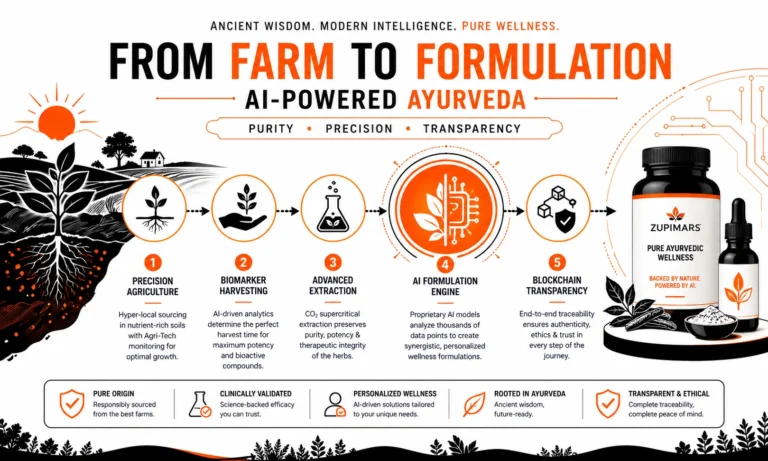
As modern pharmacology looks for multi-target solutions to complex conditions like sleep stress anxiety India, the traditional approach of multi-compound, poly-herbal formulations offers a compelling subject for scientific study. This section provides a neutral, non-promotional analysis using Zupimars RelaxTagara as a case example to illustrate the mechanistic rationale behind the bio-active approach.
Featured Definition: Bio-Active Formulation
A bio-active formulation is a substance containing natural chemical compounds (phytochemicals) that have a proven, measurable physiological effect on the body’s cellular or systemic pathways. In the context of stress, this means the active compounds are hypothesized to engage neurotransmitter or endocrine systems.
Rationale: Multi-Target Support vs. Single-Target Drugs
Synthetic sleeping pills typically target one receptor (e.g., the GABA-A receptor) aggressively. In contrast, a bio-active, multi-compound Ayurvedic formulation (e.g., one containing ingredient groups like Ashwagandha, Tagara/Valerian, Jatamansi, and Brahmi) contains numerous phytochemicals hypothesized to work synergistically on different pathways, offering a complementary strategy for nervous system calming.
Mechanistic Hypotheses (Case Example: Zupimars RelaxTagara):
- Adaptogenic Effect (Ashwagandha): Ashwagandha (Withania somnifera) contains withanolides. It is categorized as an adaptogen, which means it is hypothesized to modulate the HPA axis (Hypothalamic-Pituitary-Adrenal), helping the body achieve homeostasis and potentially reducing chronic, elevated serum cortisol levels that fuel the stress and sleep cycle.
- GABAergic Support (Tagara/Valerian): Tagara (Valeriana wallichii) is studied for its potential to modulate the GABA-A receptor via compounds like valerenic acid. GABA is the primary inhibitory neurotransmitter. This mechanism is hypothesized to dampen neural excitability, reducing the “racing mind” associated with digital stress sleep loss.
- Neuroprotection (Brahmi, Jatamansi): These ingredients are often investigated for their neurotrophic and antioxidant properties. While not sedatives, supporting neurological health may contribute to the resilience against cognitive overload and decision fatigue, which indirectly improves the quality of restorative sleep.
Important: The efficacy of any specific formulation, including Zupimars RelaxTagara, is not established by this analysis, and results are highly individualized. These statements describe potential mechanistic pathways only. Do not discontinue prescription medication or attempt to self-medicate; always consult a medical professional before starting any new regime.
10. The Future: Post-2026 Wellness Architecture
The biological cost of chronic poor sleep lifestyle India patterns is forcing a change in corporate and societal design. The future of wellness architecture will focus on prevention and technological alignment with human biology.
- Corporate Responsibility: Following the evidence that sleep deprivation research points to immense productivity loss, companies will formalize the ‘Right to Disconnect,’ making it legally and culturally unacceptable to demand responses after working hours, mitigating AI-accelerated work pace pressure.
- Precision Chronomedicine: Wearables and AI will move beyond simple tracking. Future systems will deliver personalized circadian alignment protocols based on individual chronotypes and genetic data, adjusting ambient light and temperature in real-time to optimize natural melatonin and cortisol timing.
- Acoustic Zoning: Urban planners will adopt advanced acoustic zoning to mitigate nighttime noise pollution in residential areas, recognizing that sleep fragmentation is a public health hazard linked to anxiety causes urban life pathology.
- Low-Dopamine Tech: Technology itself will be designed to curb dopamine feedback loops. Operating systems will feature mandatory “low-dopamine hours” that restrict engaging app functions, enforcing a true digital sunset to combat screen time insomnia.
Conclusion: Reclaiming Your Biological Right to Rest
The crisis of sleep disruption, stress, and anxiety in urban India is real, and it is rooted in biology, not character. By understanding the neuroscience—the cortisol spikes, the melanopsin disruption, and the nervous system overload—you gain the power to intervene effectively.
Your path to resilience involves deliberate, consistent biological action: aligning your light exposure, mastering your breath (like the Physiological Sigh), enforcing strict digital boundaries, and seeking intelligent support to interrupt the entrenched physiological loop. Your health, cognitive performance, and ability to thrive in the demanding metro environment depend entirely on your willingness to enforce the biological boundaries your system requires.
The city may never sleep, but your body must. Your action begins now. Be the architect of your own rest.
Actionable Insights: Featured Snippet Q&A
What is the fastest way to stop an anxiety-induced sleep panic?
The Physiological Sigh is the fastest voluntary intervention. Take two quick, consecutive inhales, followed by one long, slow, extended exhale. This mechanically regulates the heart rate via the vagus nerve, immediately signaling safety to the brain and calming nervous system overload.
How does high cortisol prevent sleep onset?
Cortisol, the stress hormone, is biologically antagonistic to melatonin, the sleep hormone. Sustained high evening cortisol (due to work stress and sleep pressure) chemically suppresses melatonin production. This prevents the brain from lowering its arousal state, causing the feeling of being “tired but wired.”
Frequently Asked Questions
Why are urban Indians unable to sleep properly?
It is a convergence of chronic digital stress, high urban light & noise pollution disrupting the circadian clock, and the sustained performance pressure of the metro work environment, which keeps cortisol elevated at night.
How does stress cause anxiety and sleep loss?
Stress activates the HPA axis, increasing cortisol. High cortisol suppresses melatonin and leaves the amygdala hyper-reactive (anxiety). This creates a cycle where anxiety in metro cities prevents sleep, and lack of sleep worsens anxiety.
Is screen time really affecting sleep?
Yes. Beyond blue light, the interactive content on screens creates intense dopamine feedback loops. The brain interprets this stimulation as a threat or highly engaging activity, keeping it in high-beta wave activity necessary for screen time insomnia.
Why does anxiety increase at night?
At night, the lack of external distractions allows the Default Mode Network (DMN) to activate. This DMN brings subconscious, unresolved financial uncertainty and performance pressure worries (subclinical anxiety) to the forefront, leading to night-time rumination.
What is the modern sleep–stress cycle?
It is a reinforcing loop: Work stress and sleep loss begin with chronic stress, which suppresses sleep hormones. This sleep loss then makes the brain less resilient and more anxious, creating more stress the next day. This is the stress and sleep cycle.
Can lifestyle alone fix sleep problems?
Rigorous lifestyle changes—especially circadian alignment protocols (morning light, digital sunset)—are highly effective for many. However, chronic issues may require the help of a qualified health professional or targeted bio-active support to interrupt the entrenched physiological loop.
Are herbal/Ayurvedic formulations safe and effective?
Ingredients like Ashwagandha and Tagara have documented safety profiles and mechanistic hypotheses (GABAergic and adaptogenic effects). Efficacy is individualized and requires further clinical validation. They are complementary supports, not substitutes for medical treatment.





[…] Sleep, Stress & Anxiety Neuro Architecture […]