

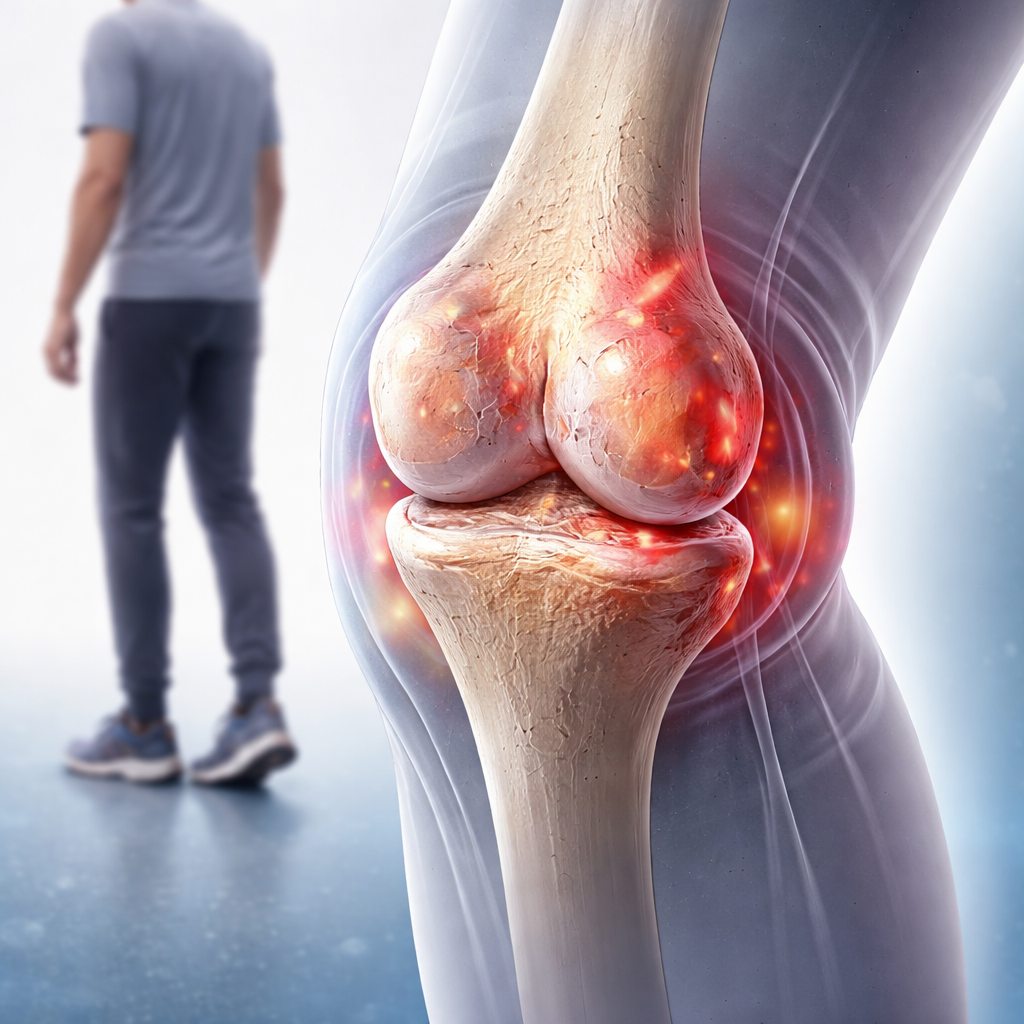
Early Signs of Joint Damage You Should Never Ignore
By Zupimars Wellness | Clinical Ayurveda Division
Joint Damage Doesn’t Start with Severe Pain
Most people wait for pain to become unbearable — but joint damage begins long before that.
In its early stages, joint deterioration is subtle. There is no sharp pain, no major limitation — just small signals that are often ignored.
By the time discomfort becomes serious, structural damage may already be progressing internally.
Understanding these early warning signs is the difference between prevention and long-term joint issues.
What Happens Inside the Joint Early On
Joint damage is not sudden. It develops gradually due to:
- Cartilage wear: The protective cushioning begins to thin
- Reduced synovial fluid: Joints lose lubrication
- Low-grade inflammation: Silent tissue damage increases over time
Clinical studies on cartilage biology show that joint tissues have limited regenerative capacity, making early support critical.
Early Signs of Joint Damage Most People Ignore
These symptoms may seem minor, but they often indicate deeper structural changes:
- Morning stiffness: Difficulty moving joints after waking up
- Clicking or cracking sounds: Early signs of cartilage irregularity
- Mild discomfort after activity: Especially after walking or exercise
- Reduced flexibility: Limited range of motion
- Occasional swelling: Subtle inflammation build-up
These are not random issues — they are early biological signals.
Why Ignoring Early Symptoms Is Risky
Ignoring early signs does not stop the damage — it allows it to progress.
Over time, minor issues can develop into:
- Chronic inflammation
- Cartilage degradation
- Persistent joint pain
- Mobility limitations
Inflammation research confirms that untreated low-grade inflammation is a major driver of long-term joint deterioration.
Early Action Can Change the Outcome
The earlier you respond, the better your chances of maintaining joint health.
Instead of waiting for pain to worsen, focus on:
- Supporting joint lubrication
- Reducing inflammation naturally
- Strengthening surrounding muscles
- Improving mobility and circulation
A recovery-first approach — combining internal and external support — can help maintain joint function over time.
Learn more about this integrated approach in our Smart Recovery guide.
When to Take Joint Health Seriously
If you notice recurring stiffness, discomfort, or reduced mobility, it is time to act — not ignore.
Understanding how joint damage progresses can help you make better long-term decisions.
Read our detailed breakdown on why instant relief is a myth and how real healing works.
The Bottom Line
Joint damage does not begin with pain — it begins silently.
The earlier you recognize the signs, the better you can protect your long-term mobility.
Small signals today can prevent major problems tomorrow.
Frequently Asked Questions About Early Joint Damage
What is the first sign of joint damage?
Morning stiffness is often the earliest sign. It indicates reduced lubrication and early inflammation inside the joint.
Can joint damage be reversed early?
Early stages can be managed and slowed down. With proper support, joint function can be maintained effectively.
Is joint cracking a sign of damage?
Not always, but frequent cracking may indicate cartilage changes. It should not be ignored if combined with discomfort.
At what age does joint damage start?
It can begin as early as your 30s. Lifestyle, activity level, and inflammation all play a role.
How can I protect my joints early?
Focus on movement, nutrition, and inflammation control. Early care is the most effective strategy.







[…] To understand early health signals, read early signs of joint damage. […]